Published March 2026
Your Farmer’s Voice: Bio Hof Marco Jostmeier
This year is clearly very peculiar. Not just because of the Corona-pandemic, but because we gained a great partner. More exactly even 499 partners. We took the chance and accelerated the development of our farm this year. We (especially Tjorben!) were so happy, the day we joined CrowdFarming with 500 adoptions for our “Goldmarie” potatoes. But we weren’t even sure whether it would work…
All in all, we never thought that we would find so many supporters – but the 500 adoptions were sold out after less than two months, just because you guys were so amazed by our way of farming and wanted to support it. We want to send you all a big thanks!
So, let’s go back to where it all began.
Our farm has existed for about 5 years now. In the beginning there wasn’t much…there were the old buildings, Marco and his best friend Tim, lots of ideas and the dream of agriculture and to follow his family traditions. Most of the time at the beginning they spent buying old-school machinery, experimenting, cleaning up all the barns and stables and working on Marcos most loved project, the cow shed. He has always loved these animals and never wanted to be a farmer without any of them.
Tim, his parents Uwe and Christa, and Marco usually had dinner together and while enjoying beers, they thought about the future of the farm. They had many crazy ideas, Tim wanted to try nearly everything and Marco always wanted to use old-school farming machinery, like his family did before. One of the ideas was growing potatoes and selling them to friends. But it took some time, until it took off.
In 2018, the first cattle came to the farm and both of them realized for the first time what they had achieved already. And that all the work was worth it. So, the next projects (more cattle, more fields and the conversion to organic agriculture) got started and I, Tjorben, met Marco. At the end of 2019 we decided to grow our own potatoes.
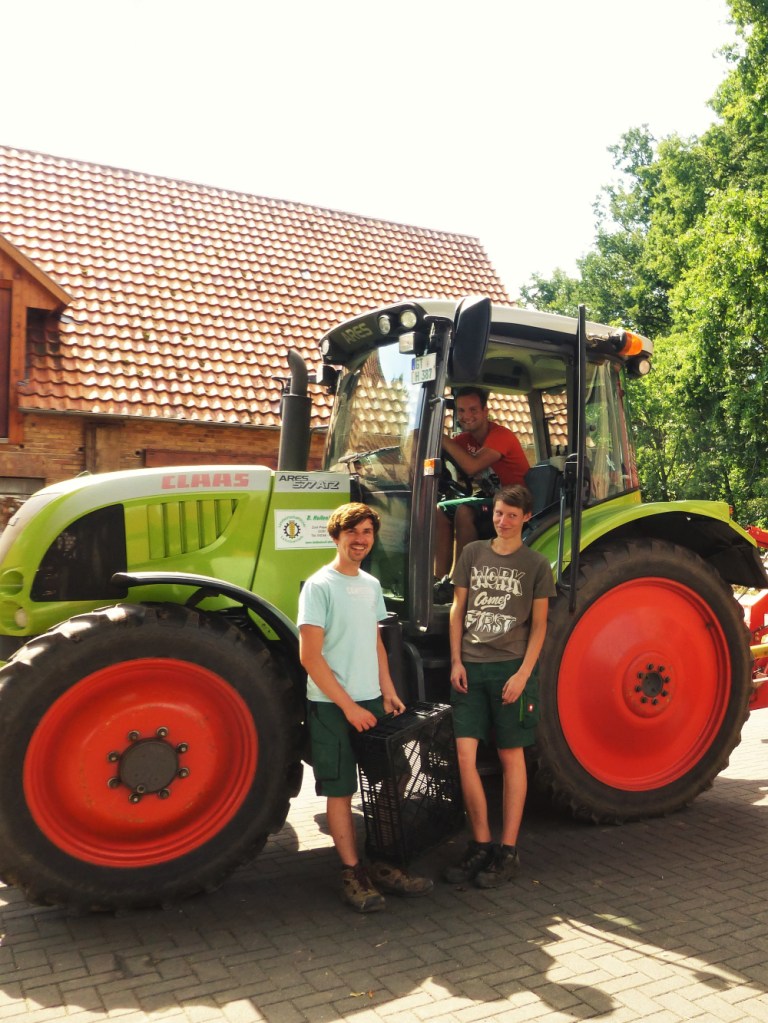
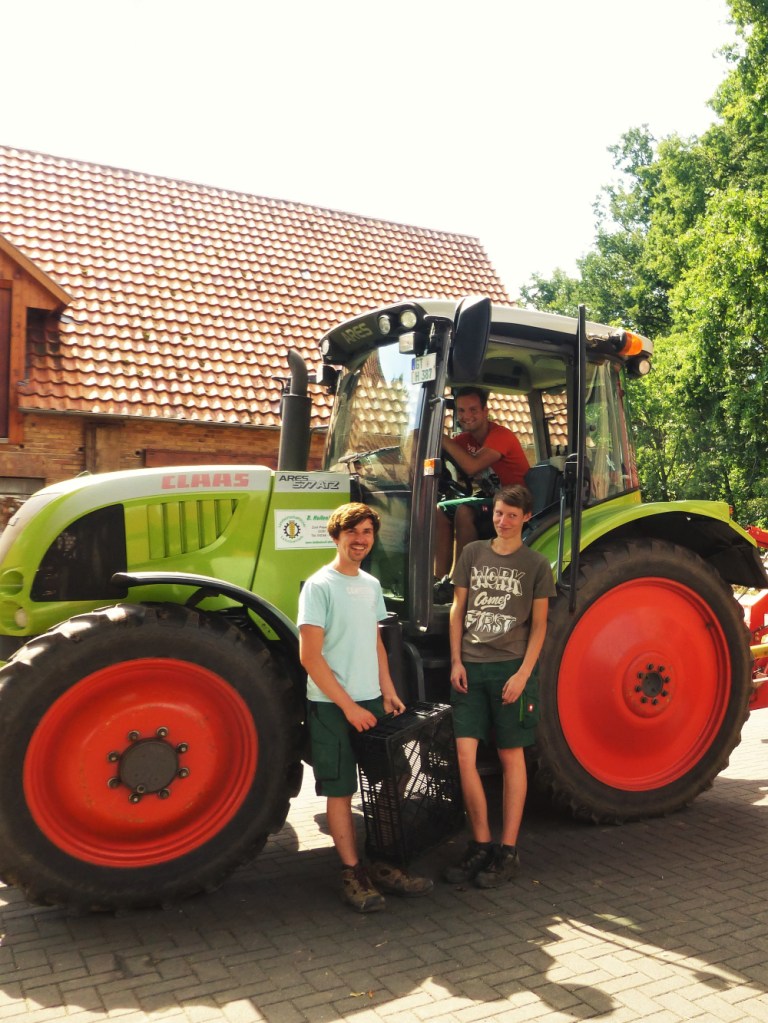
We did not have the knowledge nor anything else for this idea, but we (especially Tim) wanted it. We bought an old machine to plant the potatoes, 12 old boxes, a sorter to grade the potatoes and some more things. With this old equipment we grew 0.5 hectare of potatoes.
In 2020, I started thinking about CrowdFarming, because I had seen it in the media and always wanted to be part of it. We wrote texts, explored packaging, took photos, calculated prices and so on. There were many aspects to prepare.
Around Easter time we planted the potatoes – with lots of fun and laughter and our friends who came to watch the progress.
The process went on and on, we worked at the field, cared for the plants, were confronted with problems and learned to solve them.
The plants started growing and growing, and at the end of May, the potato bug had discovered our fields, so one of us had to set off for a daily walk along the planting rows to manually collect insects and protect our potatoes.
The weather was perfect, our CrowdFarming project got published and the first adoptions came in. All of us were speechless when reading the weekly report, we were overwhelmed by the willingness for sustainable consumption and this new kind of farming.
After the first seven days we had 64 adoptions and were so amazed, the number increased and we could not believe it all went so well.
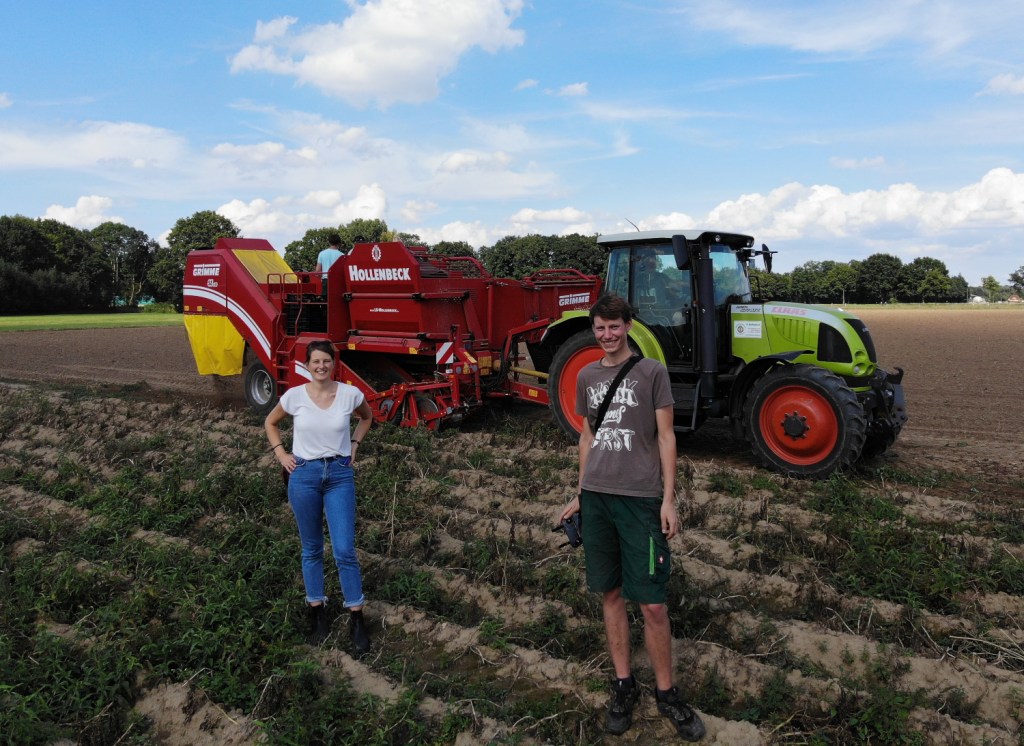
When the time had come, we set a date to harvest and invited our friends and family and even our Farmer Analyst Antonia from CrowdFarming, to help and see the harvest. We showed Antonia our farm, talked about the last details and even made plans for the next year. Then the reaping began, and we all were part of it. We realized very fast, our potatoes looked gorgeous, and it was more than we ever thought it could be. We filled the trailers and all in all we had more than 18 tons of potatoes. Almost twice as much as we expected from our fields.
What a great year for us!
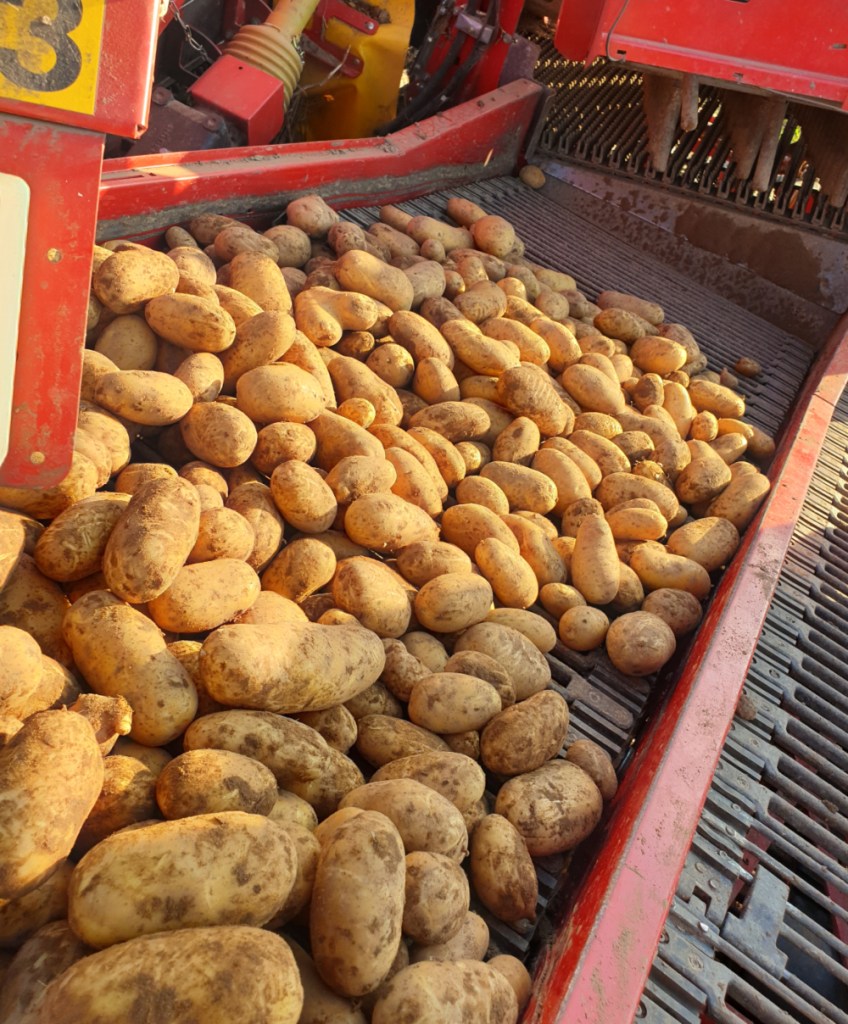
The next challenge was to separate, and to take out green, mildewy and too small potatoes, but we managed with the support of friends and family, and with an old machine from Marco’s family. However it still took us two weekends.
After that, the potatoes had to be packaged, and during that time we received the news: all of our 500 potato fields were adopted! We had never even dared to dream of that, but this success shows us how important it is to dream and try.
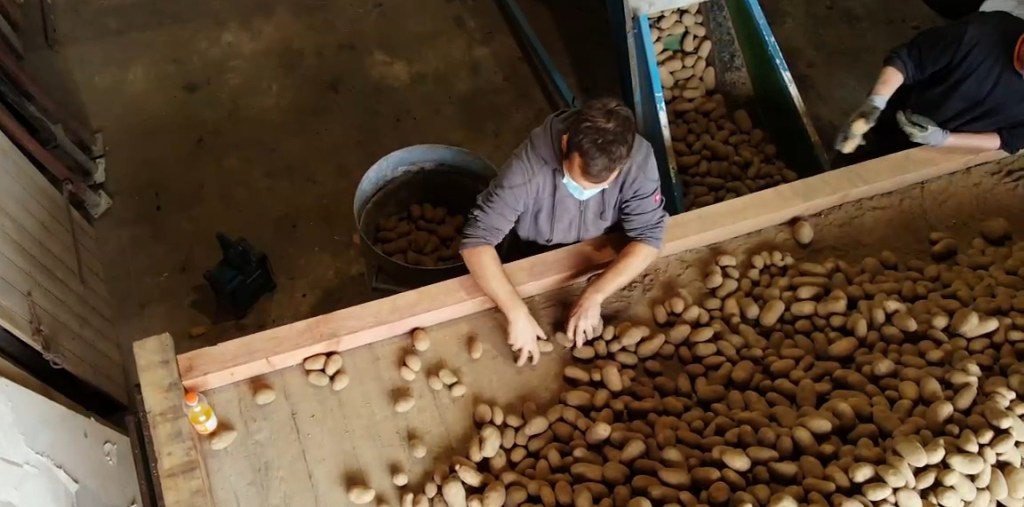
We continued weighing and packaging the potatoes, closing the boxes and so on, and I especially was quite annoying and wanted everything to be perfect. But: Counting the packets, I realized… there were only 499! We counted again and again, but we could not find the last one. Finally I gave up, one package would have to be sent another day.
The next day, the containers should be picked up. But in the first moment I was shocked, only one truck arrived and it would never be able to carry all the boxes! At the end I worried for nothing, because a second truck was already on its way to our farm. I learned to be patient and positive…
The packages were delivered and we received very positive feedback that made us smile. We achieved exactly what we wanted: communication between consumer and farmer.
Because we had so many potatoes left we decided to sell them as well, but we never thought that we would be able to sell them all. But you completely shocked us, one week before the campaign should end, we were sold out! We even had to order new boxes to package all of the Goldmaries.
The packaging itself went without any problems and for the next season we are much wiser with all your feedback, our experiences, and ideas on how to improve, for example a new packaging design.
We are so glad all of you support us and that you trust us. With this feeling of courage and ambition we are ready for next year – hopefully with you as our partner, because nobody can do alone what we achieve together!
For the next year we have more fields and we even started a second project with a second potato variety – “Heiderot”. When we think about the past season, we always have to smile and as a souvenir we designed a calendar. You can buy it in our web shop. It is very peculiar and a commitment for sustainable and transparent agriculture over the whole year.
After all of this, we are still wondering how all this could happen. We can only guess… It might be the mix of a 26 year old farmer, a 30 year old businessman and a 21 year old design engineer who are as different as they could possibly be. We all come from different backgrounds but are so connected by our passion for agriculture.
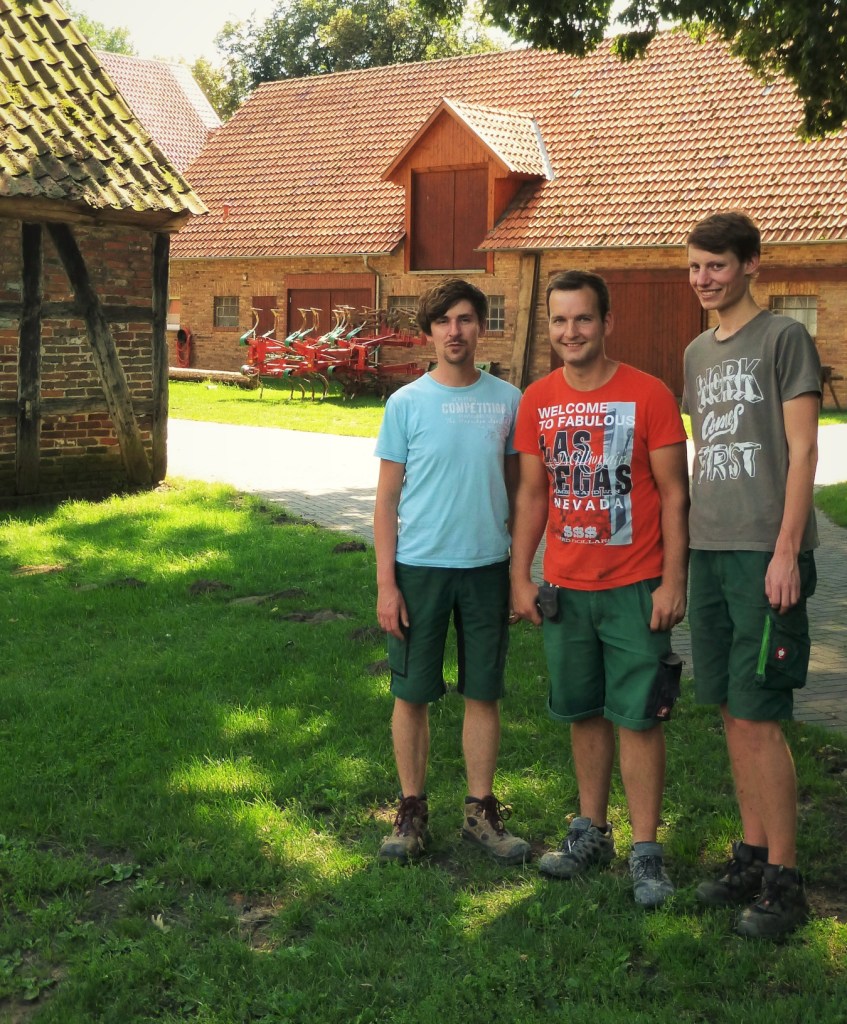
To handle these differences is not always easy, but it provides the base to our success. We often spend hours and hours discussing, what might seem a waste of time to some, but for us it’s so motivating and inspiring. I believe in us and that we can achieve more. We help us to stay strong, because together we are stronger than alone, together we can jump as high as from a beer mood to a successful potato project.
Together we are
the organic farm Marco Jostmeier and we farm with passion.
Written for you, with love
Tjorben, Bio Hof Marco Jostmeier
Written by Farmers of CrowdFarming

Keep digging ...