Looking for more? 

We’re just an email away.

Recipes

min

Published March 2026

Nuts about Nuts

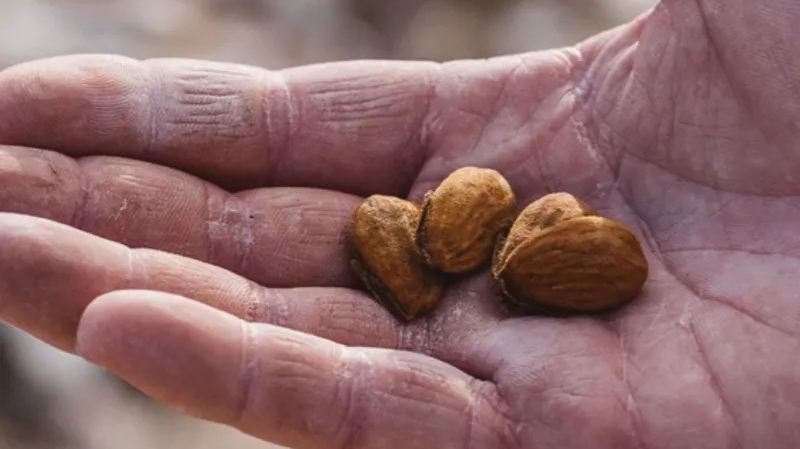
Here at CrowdFarming, we’re nuts about nuts. In a world where our food choices have far-reaching consequences, it’s crucial to explore options that not only benefit our health but also contribute to a sustainable future. At the heart of this nutritional and environmental intersection are nuts – small powerhouses of goodness packed with essential nutrients. Our farmers of regenerative-organic almonds from Alfonso from La Junquera, Doña Marina, Los Aires or AlVelAl are experts on the matter and have been implementing practices to regenerate the soil while growing these highly nutritious products. 
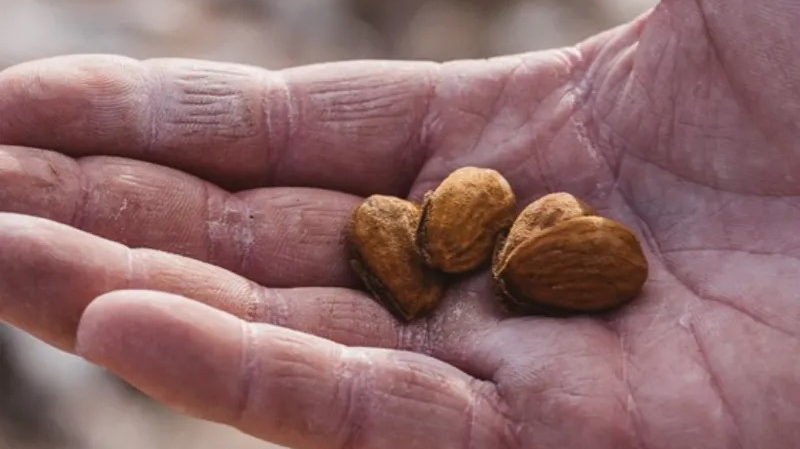
Almonds from La Junquera


So what makes nuts sustainable?

Mareike from Fork Ranger shared with us that nuts are one of the food products we should eat more of. A group of researchers studied what we should eat so that in 2050 we can feed 10 billion people in a healthy and sustainable way. They found that on average, it’s best to eat roughly 50 g of nuts each day.
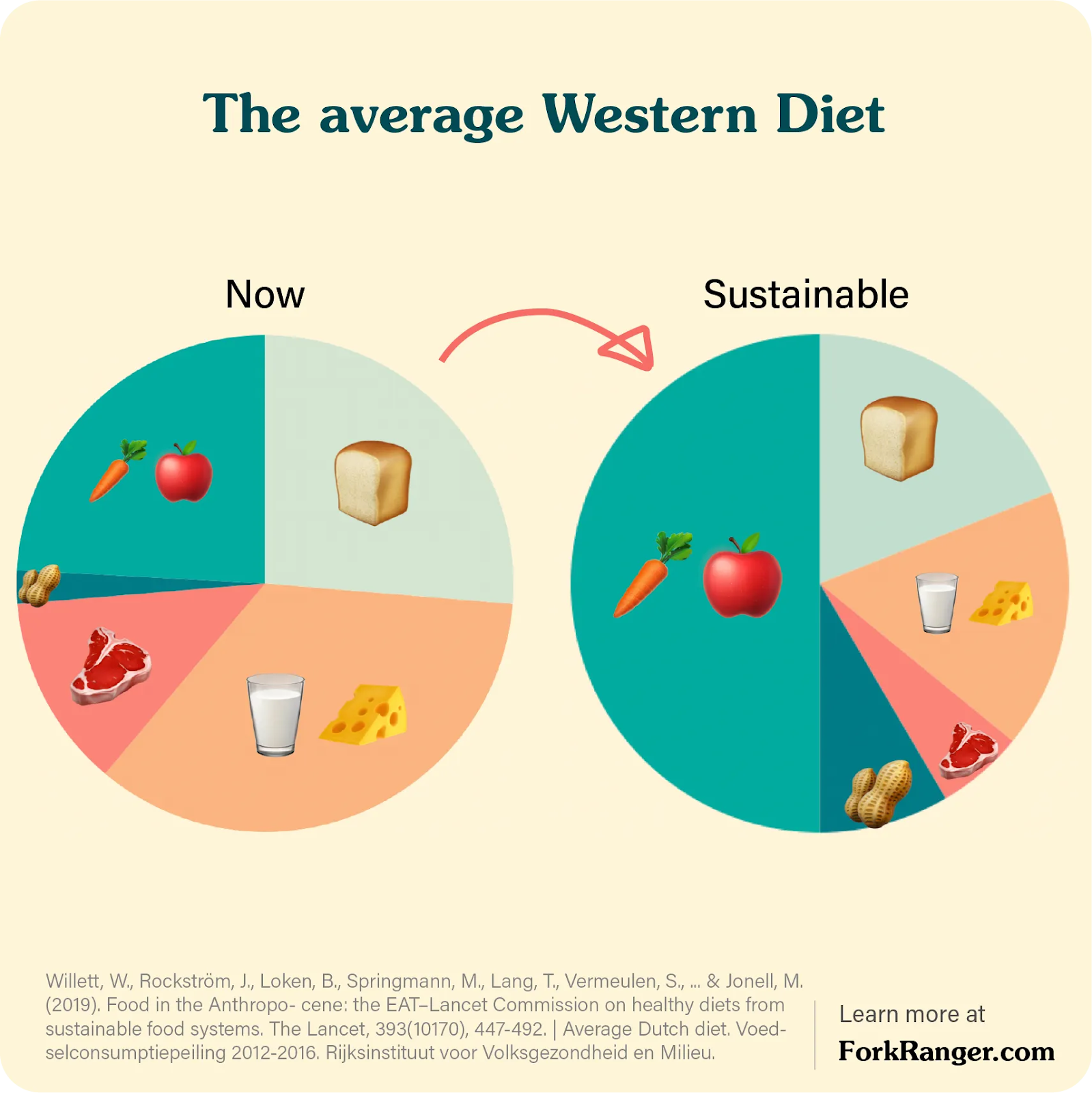
This infographic comes from the free Fork Ranger app. Download the free Fork Ranger app to discover more about sustainable food.


One of the reasons to eat more nuts is because of their high protein content. If you compare nuts to other high protein foods and look at their CO2 impact, nuts have the lowest impact on the climate.
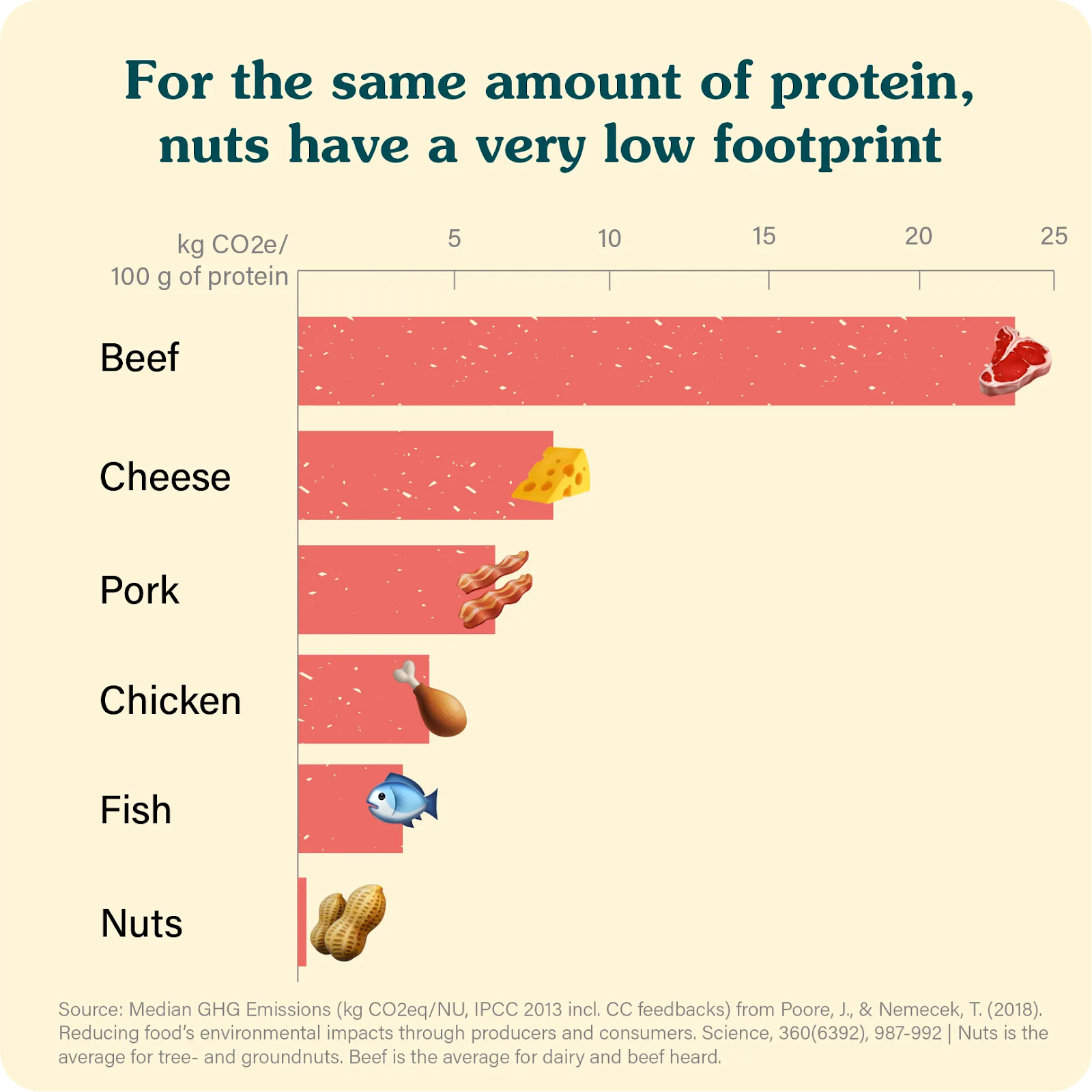
This infographic comes from the free Fork Ranger app. Download the free Fork Ranger app to discover more about sustainable food.


Besides nuts, legumes are in a similar position: they also provide plenty of protein, but nowadays, we eat too little of them. We need to increase our consumption of these two great foods by a factor of 8. 
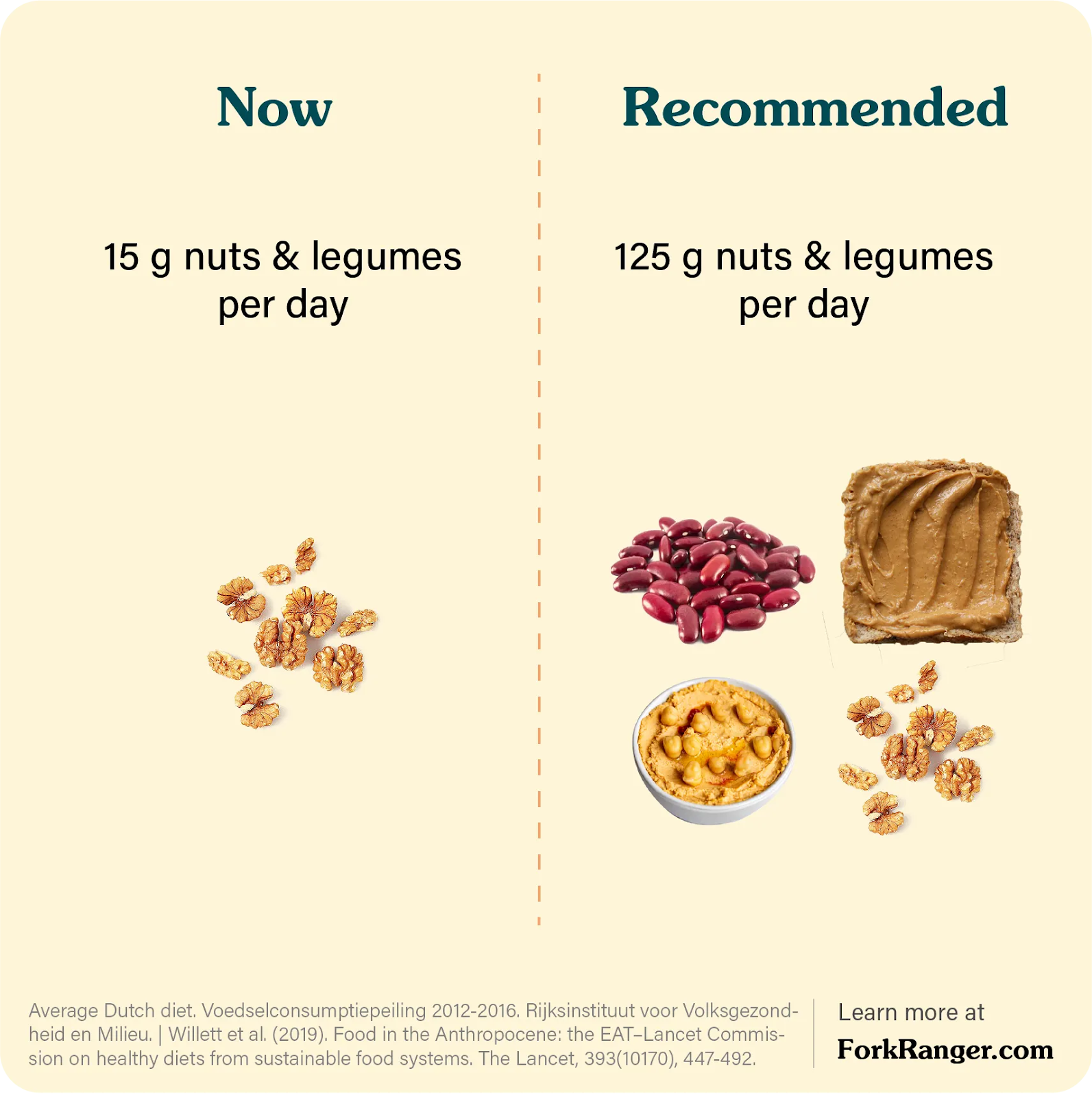
This infographic comes from the free Fork Ranger app. Download the free Fork Ranger app to discover more about sustainable food.


Luckily it’s easy to add more nuts in various ways:

  • Almonds or pistachios as a snack
  • Walnuts or almonds through a pasta dish
  • Nuts and seeds through yoghurt or oatmeal
  • Peanut butter sandwich
  • Sunflower seeds on top of pasta or cooked in rice
  • Cashews in a rice recipe


But are all nuts the same?

At Crowdfarming, we know that different types of nuts have different benefits and impacts on the climate depending on the farming practices used to grow them. Although almonds sometimes get “bad-press” due to their high water consumption, most of our almond farmers based in Spain don’t actually use any type of irrigation for their crops (what we call in Spanish “secano”)  and those who do are using eco-conscious irrigation methods such as drip irrigation etc. 

Therefore, instead of buying almonds from California in the supermarket (that do consume large amounts of water!), why not try Pedro from Doña Marina’s delicious organic and “in regeneration” almonds that haven’t required any irrigation? This is a special project because by purchasing these almonds you also participate in the reforestation of part of the farm with native species.

Check out this awesome recipe from Fork Ranger to get inspired on how you can use your CrowdFarming almonds. 


Add almonds to Tagliatelle with Pesto Rosso

This creamy pasta recipe uses ‘pesto rosso’, made from sun-dried tomatoes instead of basil. The almonds give a nice crunch and the rocket adds a bit of spiciness. You can play around with the amount of cream; if you want a lot of sauce you can add a bit more. 
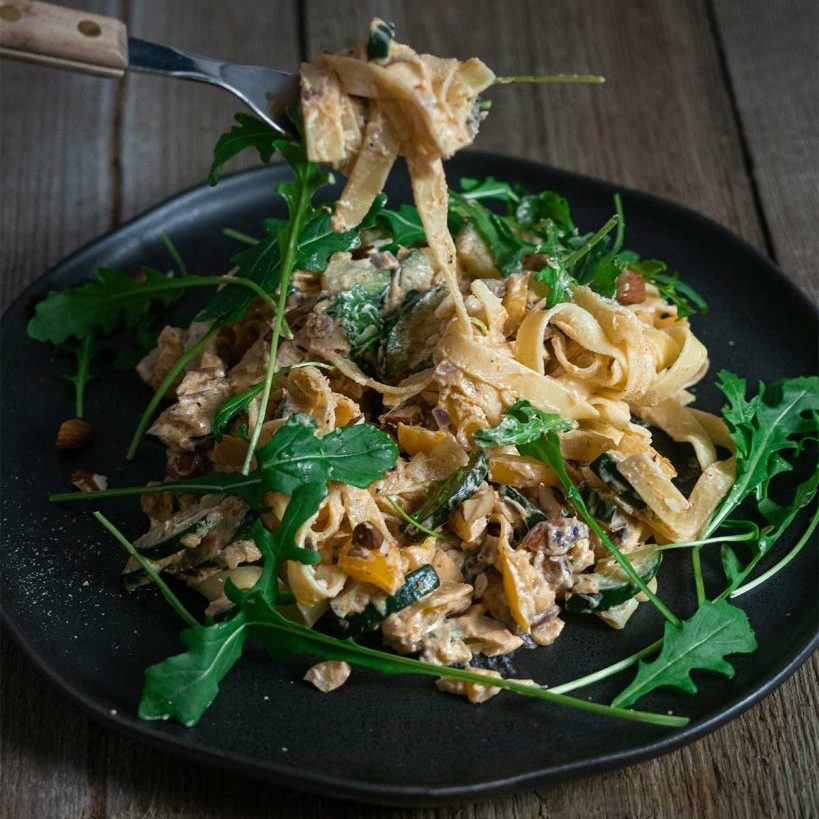
This recipe is created by Fork Ranger. Discover more sustainable recipes in their free Fork Ranger app.

Written by Emilia Aguirre

Emilia Aguirre

Emilia Aguirre is our Awareness & Advocacy specialist — which means she spends her days asking the uncomfortable questions about how our food is grown, priced, labeled, and sold. She hosts What The Field?!, a podcast packed with stories from the ground, hard-hitting research, and conversations with the people shaping the future of food (whether they like it or not).

Share this content:

Keep digging ...

Recipes

40 min

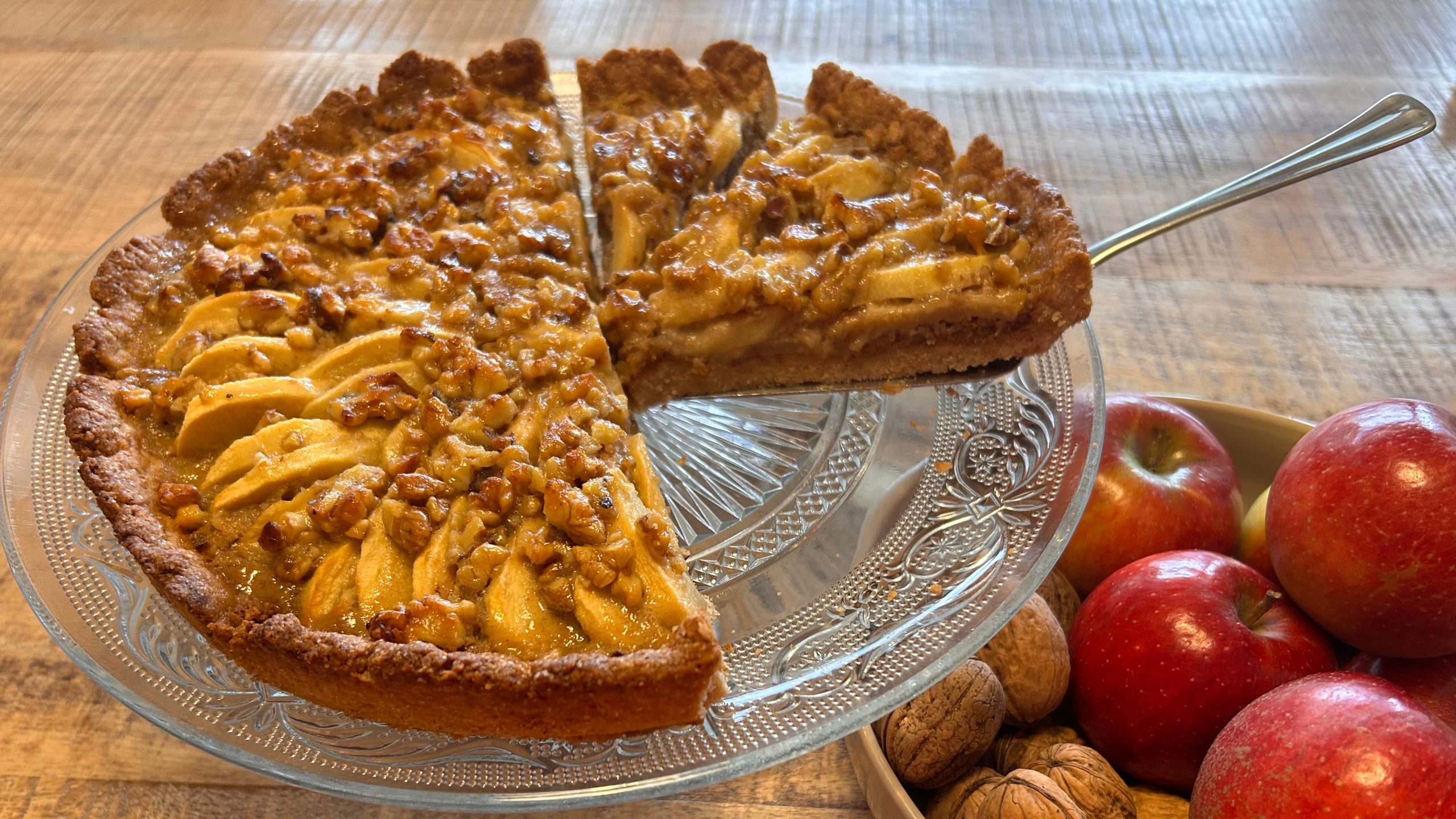
Apple walnut tart recipe

With the holidays just around the corner, our farmer Kathrin Wiest from Biohof Hund has shared one of her favourite seasonal recipes: an apple walnut tart passed down through generations in her family.Kathrin grew up spending weekends on her grandparents’ farm, where she helped with the hay harvest, milking the cows, harvesting vegetables, and discovering early on the importance of knowing where your food comes from. “Good food doesn’t begin in the kitchen,” she says, “it begins in the field.”This profound appreciation for the land followed her through her career in gastronomy and now into her work at Biohof Hund, where she combines her diverse background in gastronomy, organic farming, and horticulture.For Kathryn, working on the farm is more than just a job: “It’s a return to my roots,” she says, “a conscious choice for sustainability and regionality, and a step toward a future that truly makes sense – for my family, for our farm, and for society as a whole.”For Kathrin, this recipe captures values she grew up with: simplicity, seasonality, and a meaningful connection to the land.In this simple and delicious recipe, apples are arranged on top of a rich walnut cream and soft buttery crust: the perfect dessert to have around this winter.Save this recipe for your next holiday gathering!Apple & Walnut TartIngredients:  300 g spelt flour (plus a little extra for dusting) 120 g soft brown sugar Pinch of salt 2 medium eggs 200 g butter (130 g cold, 70 g softened, plus a little extra for greasing) 1 kg tart apples 2 tbsp lemon juice 150 g walnut halves 1 sachet vanilla sugar 50 g honey 80 ml double cream 1 pinch ground cinnamon Preparation:Place 250 g of the flour, 70 g of the sugar, a pinch of salt, 1 egg and the 130 g cold butter (cut into pieces) in a bowl. First mix with the dough hooks of a hand mixer, then knead briefly by hand until you have a smooth dough. Shape into a disc, wrap in cling film and chill for 30 minutes.Peel the apples, quarter them, remove the cores and slice into thin wedges. Toss with the lemon juice.For the filling, finely grind 50 g of the walnuts in a food processor. Beat 50 g soft butter, 50 g sugar, the vanilla sugar and a pinch of salt with a hand mixer until very creamy. Beat in 1 egg. Add the ground nuts and 50 g flour and mix briefly.Preheat the oven to 200°C (180°C fan). Roll out the chilled dough on a floured surface to about 30 cm in diameter and line a greased 28 cm tart or springform tin. Press the dough up the sides and prick the base several times with a fork.Spread the walnut cream over the base and arrange the apple slices on top. Bake on a rack set directly on the oven floor for 25 minutes.Meanwhile, for the nut topping, roughly chop the remaining 100 g walnuts. In a small saucepan, heat the honey, cream, cinnamon and 20 g butter, bring to the boil while stirring and simmer for 2 minutes. Stir in the walnuts.After the tart has baked for 25 minutes, spoon the nut mixture over the apples and bake for a further 10 minutes on the middle shelf.Leave to cool in the tin on a wire rack. Carefully remove from the tin and serve with whipped cream.

Read