Published March 2026
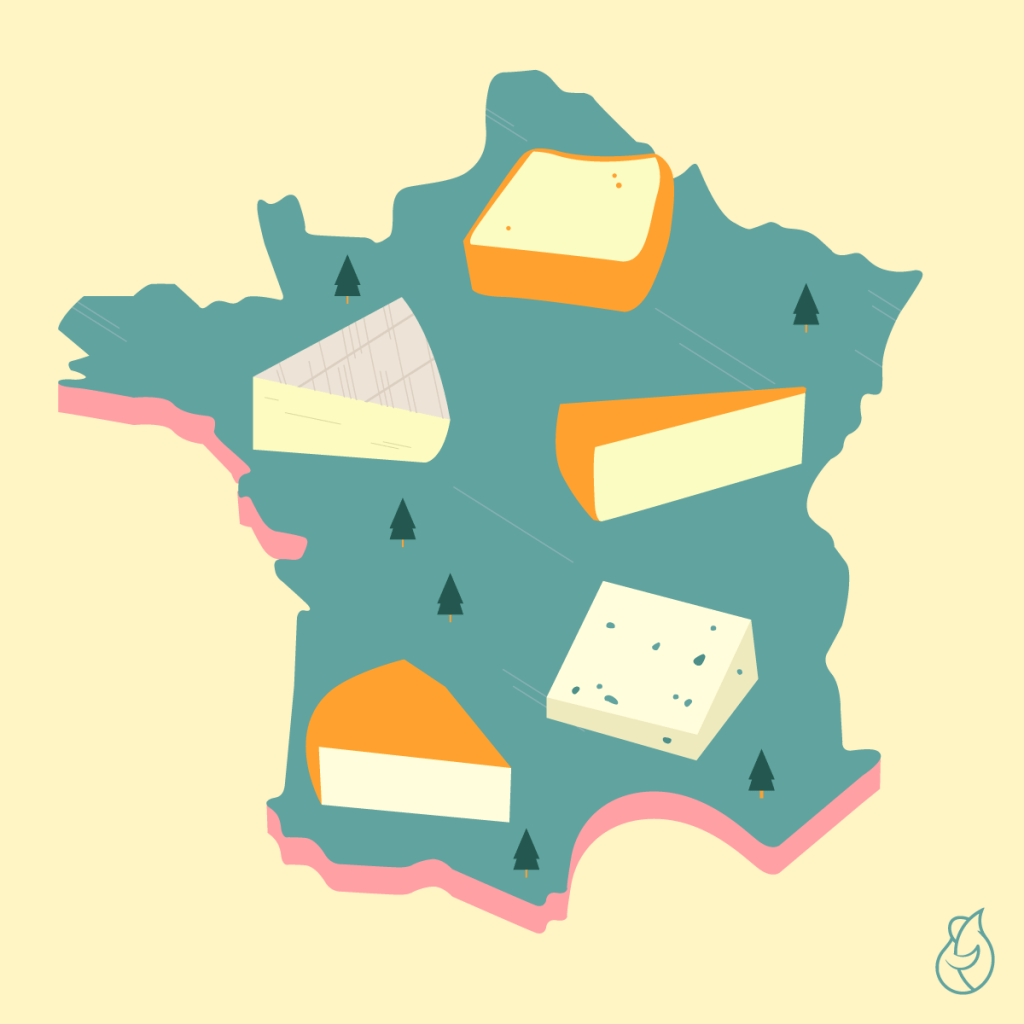
The diversity of French cheeses, a historical reflection of the landscape.
France, THE country of cheese and the only country that produces so many different varieties… about 287? A number that is difficult to define, but a French reputation that is well established!
Cheese is a real national symbol in France.
For the anecdote, several politicians such as Charles de Gaulle once said that “you cannot govern a country that offers 246 cheeses” or Winston Churchill, who declared during the German occupation that “a country that is able to give the world 360 cheeses cannot die”.
Of course, when we think of France, dozens of cheeses come to mind: Camembert, Roquefort, Comté, Saint Nectaire… but why were they born on French soil? Why has French agriculture produced such a wide variety of cheeses, of which today more than 45 French cheeses have been awarded PDO (Protected Designation of Origin) recognition?
To answer these questions, we must go back in time. The first cheeses produced in France are said to be 5,000 years old. Later, writings from the Middle Ages confirm the numerous cheese traditions of the various French terroirs.
In France, the cheese regions are historically the areas where cereals could not be grown. Poorer regions where grass was used by the animals to produce milk, and therefore cheese. Cheese was originally a simple means of making milk keep longer by processing it.
Let’s discover some good examples of regional cheese specialities!
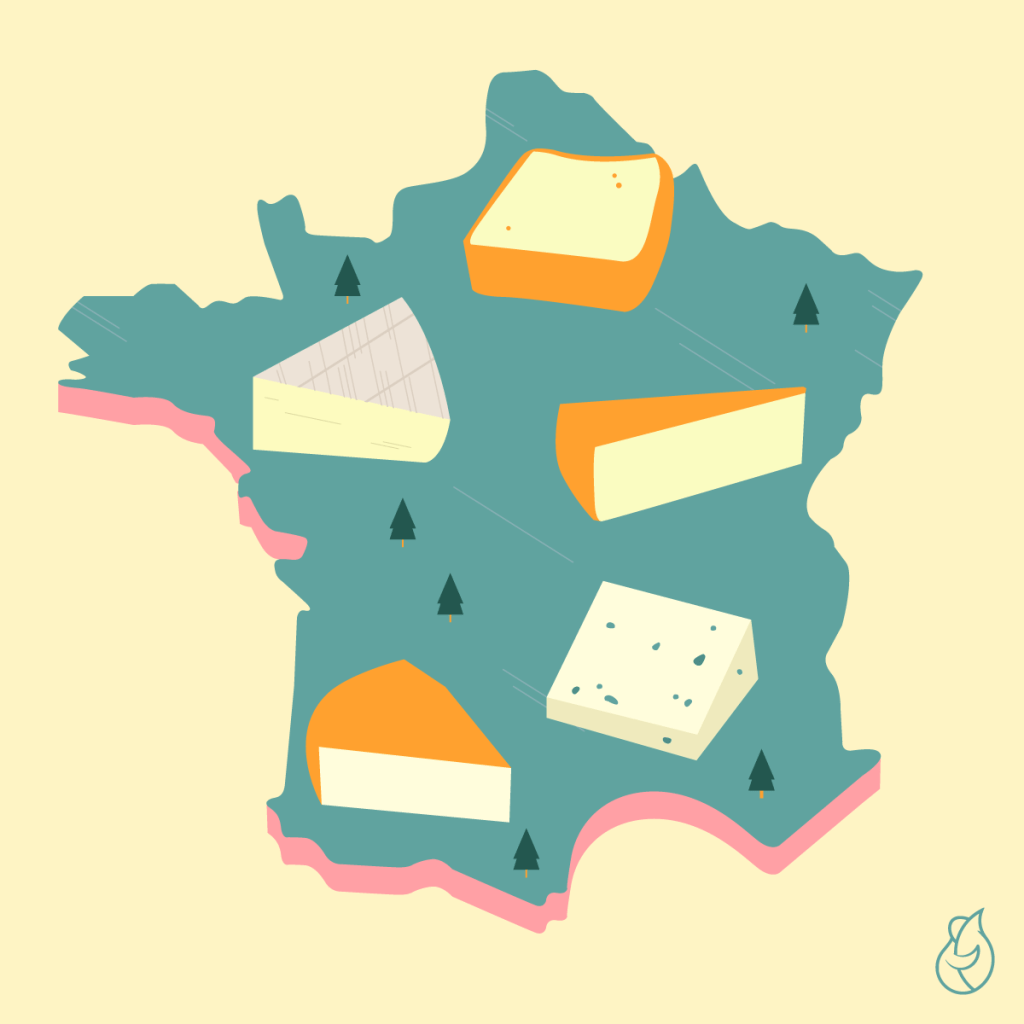
Roquefort, whose traces can be found as early as the 11th century in a rural region with a terrain that is difficult to farm, is a blue cheese made from raw sheep’s milk, which was recognised and protected by many kings of France at a very early stage. At the time, it served as a payment owed to the Abbey of Conques. It was also the first cheese to be recognised as a Denomination of Origin DOC (Appellation d’Origine (AOC)) in France in 1925.
The higher you climb, the bigger the cheeses, because historically, producers used to join forces to move their herds to pasture in summer after the snow melted and collect their milk to produce large cheeses that could be kept until the following summer. Already in the 8th century, fruiteries in the Jura produced these large cheeses, probably the ancestors of today’s Comté.
In the Alps, a mountainous region, large cheeses such as Beaufort and Abondance were made the same way.
In the Massif Central and in Auvergne, with cold and snowy winters, there was the same need to produce large cheeses with a longer shelf life, such as Cantal, which has borne its name since 1298, or Laguiole.
The Pyrenees also produced large sheep’s milk cheeses, such as Ossau Iraty or Béthmale, which could be kept until the following spring, when the sheep started producing milk again.
In the drier regions of the Mediterranean, goats adapted better to the climate and sparse vegetation, and small cheeses such as Picodon were produced, evidence of which can be traced back to the 14th century and which would also have served as payments in kind for farm leases.
In the Northern Plains, hardly any grass grows in the winter and therefore there is little milk, so that the cheese originally produced in the monasteries had to be kept all winter long. Thus Munster was born in an Alsatian monastery in the 9th century, closely followed by Maroilles a century later.
Brie is also part of France’s history, many historical anecdotes refer to it being used by Blanche de Navarra to flatter King Philippe Auguste in 1217 to preserve the County of Champagne. Later, in 1814, at a congress in Vienna, he was named “King of Cheeses”.
In Normandy, the humid climate favours the presence of grass, which allows the production of milk and cheese throughout the year. The cheeses therefore do not need to be stored for long, so that Camembert and Neufchâtel cheeses are produced with short, soft maturing periods. When winter comes, the cheeses of this region mature a little longer, such as the Pont l’Evêque and the Livarot, which date back to the 13th century.
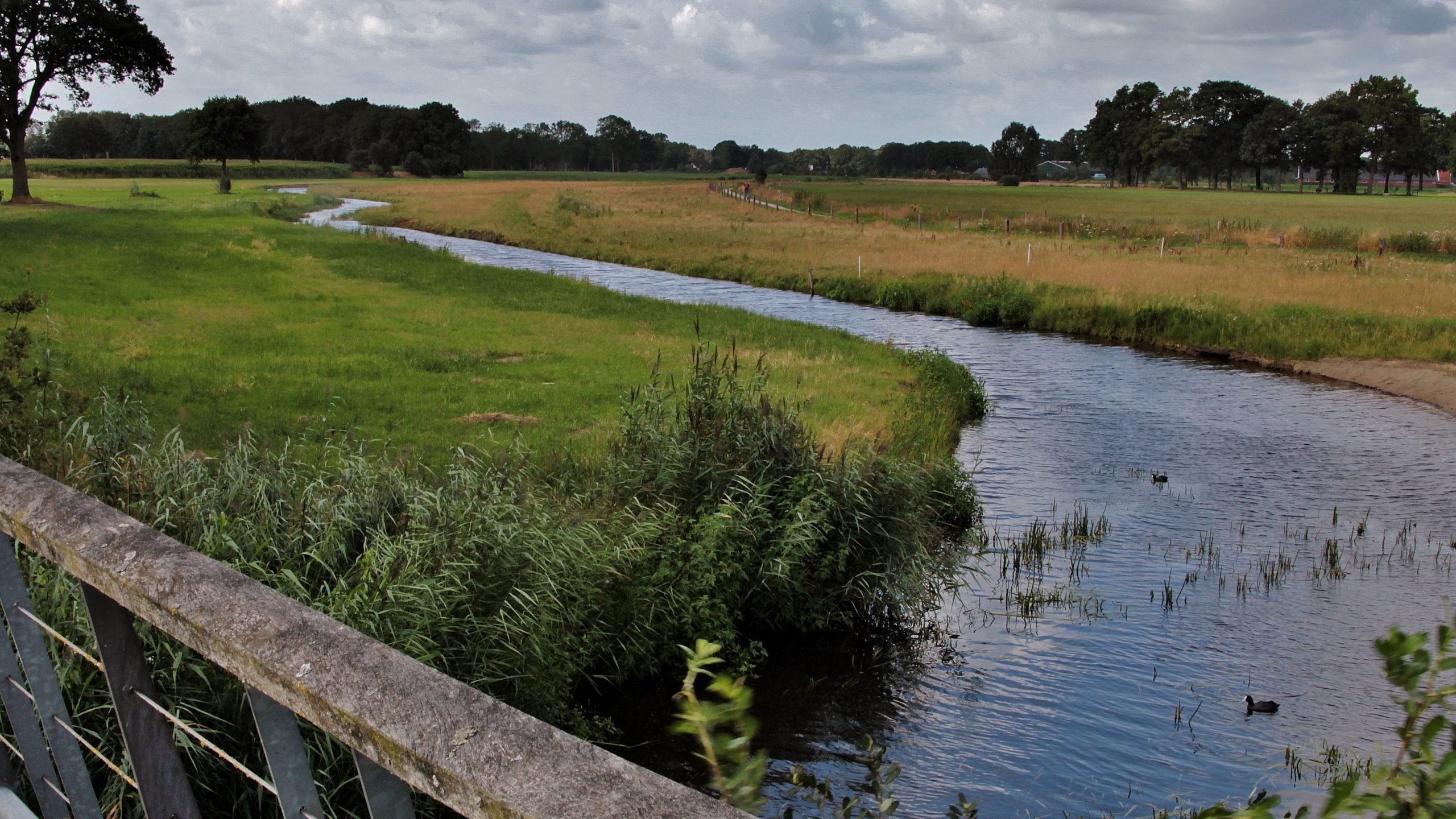
In conclusion, the diversity of the landscapes in France mirrors the diversity of the cheeses. Each region has its own flora and climate, which has an impact on the composition of the milk and the way the cheese is made.
These cheeses, like many others that have not been mentioned, belong to the history of France, as a mirror of its landscape, which gives each region a special touch.
References
• FranceInter [Online] at: <https://www.franceinter.fr/histoire/connaissez-vous-les-origines-du-fromage> [Accessed in July 2020]
• Fromage de France [Online] at: <http://www.fromage-france.fr/> [Accessed in July 2020]
• Origin Food [Online] at: <https://www.originfood.info/histoire-aop/> [Accessed in July 2020]
• Le Sénat [Online] at: <https://www.senat.fr/rap/r07-440/r07-44018.html> [Accessed in July 2020]
• Formage AOP [Online] at: <https://www.fromages-aop.com/wp-content/uploads/AOP_brochure.pdf> [Accessed in July 2020]
• Picondo AOP [Online] at: <https://www.picodon-aop.fr/fromage-terroir-et-territoire-picodon-aop/> [Accessed in July 2020]
Written by Agathe Ortolo

Agathe busca y acompaña a los productores franceses que quieren vender sus productos de forma más justa. Encontrar productos típicos franceses, degustarlos y convencer a los agricultores de que se unan al movimiento anima el día a día de Agathe. En lo personal, intenta disfrutar de una "vida más sencilla", priorizando los buenos momentos compartidos sobre una vida de consumo material.
Keep digging ...