Published March 2026
Is organic food really more expensive?
When you stroll down the supermarket aisle, it’s easy to look at organic produce and think, why pay more for the same apple? But before you reach for that (sometimes) cheaper, non-organic alternative, let’s take a peek behind the scenes. Because spoiler alert: conventional food might not be as wallet-friendly as it seems. In fact, it comes with a whole bunch of hidden costs that you’re already paying for — just not at the checkout.
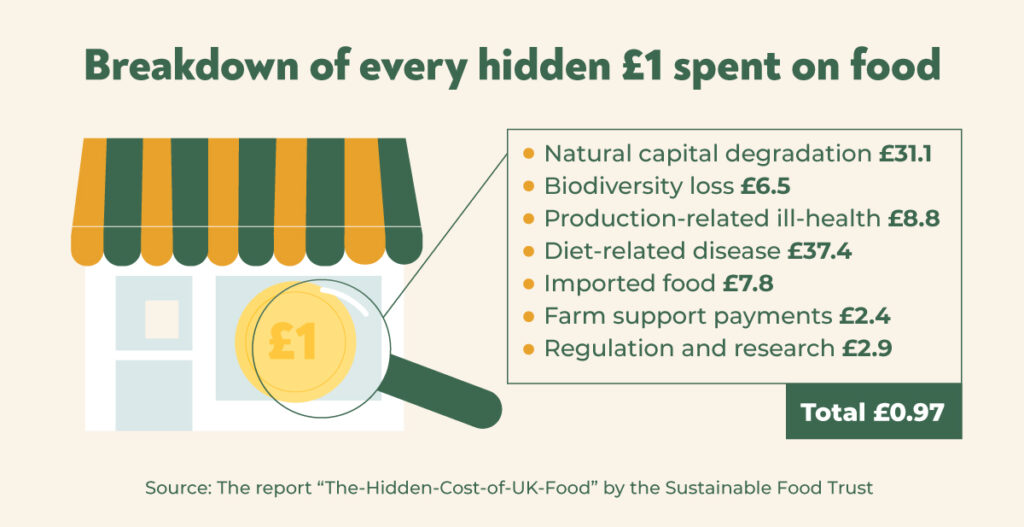
The report “The-Hidden-Cost-of-UK-Food” by the Sustainable Food Trust finds that in the UK, the food people eat costs them almost twice as much as appears in their shopping bills. They did a study that found that in the UK, for every £1 spent at the check-out, another £1 was spent in hidden ways.
The true cost of non-organic: what they’re not telling you
Imagine buying a car that’s dirt cheap upfront but needs constant repairs, pollutes the environment, and drains your savings in the long run. That’s kind of like non-organic food. You might save a few cents at the store, but hidden costs are lurking everywhere. Let’s break it down:
1. Environmental clean-up fees:
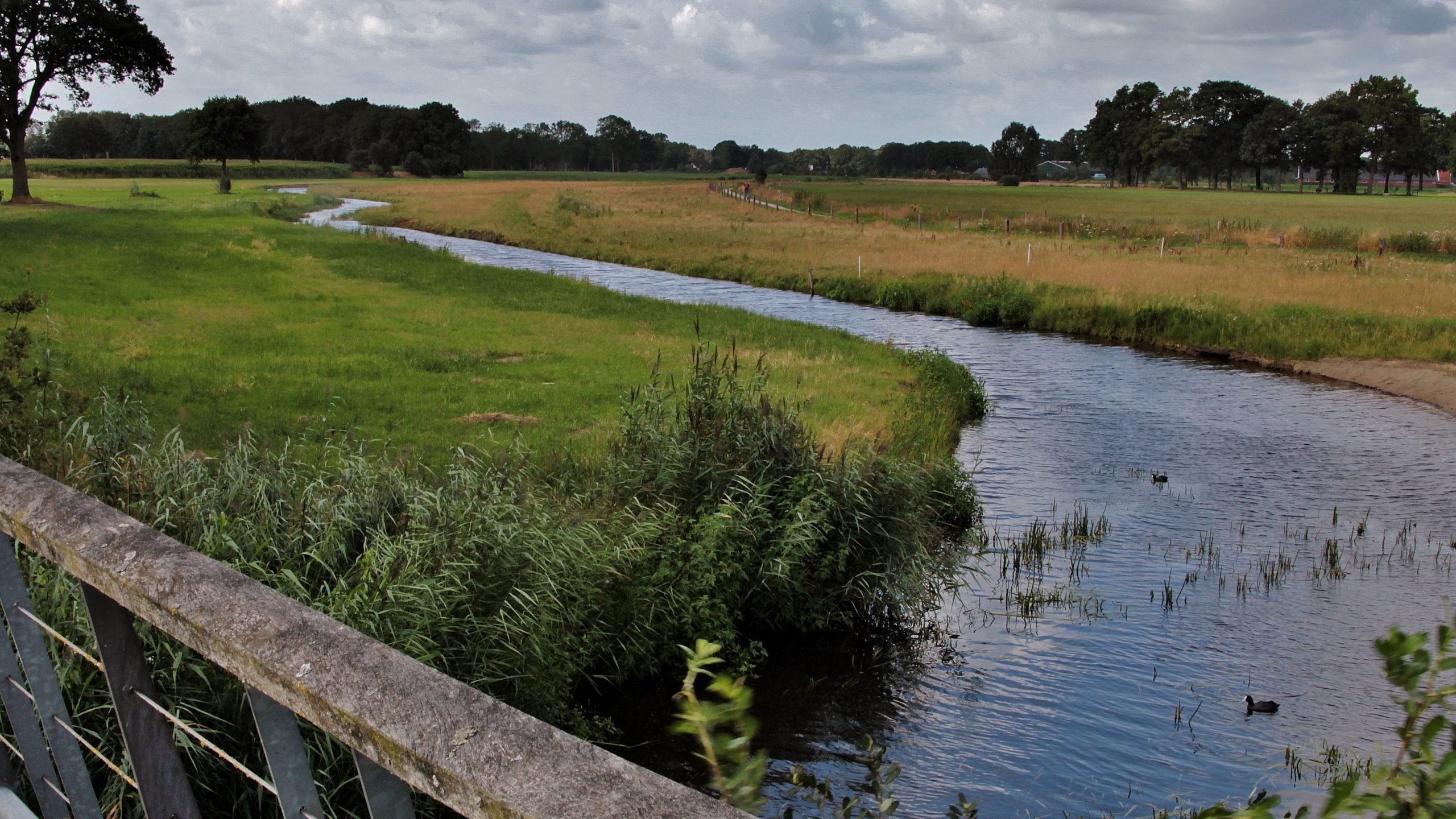
Non-organic farming relies heavily on synthetic pesticides and fertilizers. Not all of these are used by the plants or retained by the soil, so they end up flowing into watersheds and can cause soil degradation, water pollution and loss of biodiversity. Here’s the kicker: you help foot the bill to clean up this mess. The European Union spends €2.5 billion annually on cleaning up water contaminated by pesticides and fertilizers (EU Science Hub.) These hidden costs are passed down to you in the form of taxes, environmental damage (the loss of natural capital such as clean air and water, and a healthy environment, which are essential for human well-being.), and more expensive water bills.
2. Health expenses you didn’t sign up for:
Those chemicals we just mentioned? They don’t just flow into water sheds. They can find their way into your food, water, and air, affecting human health. Pesticides have been linked to a range of health problems, from neurological issues to cancer. In the FAO’s report on “The state of food and agriculture 2023” they found that 11,000 billion dollars in health-related costs are spent every year, mainly due to agricultural and industrial pollution.
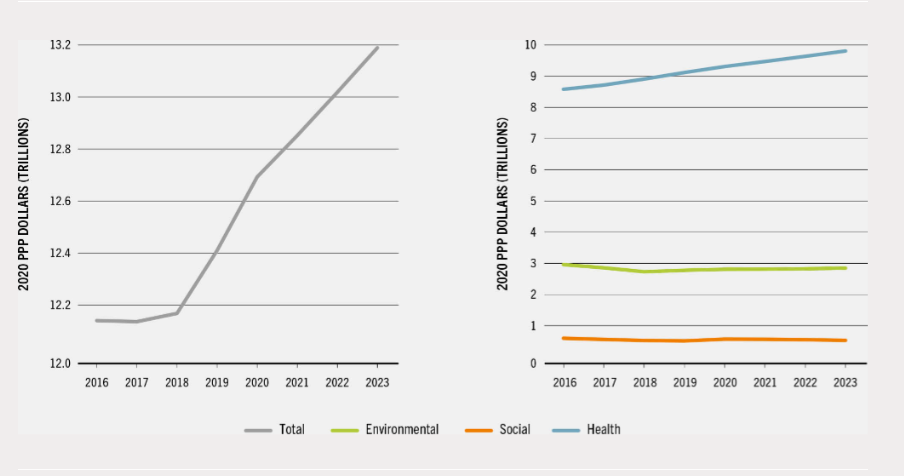
In fact, they shared a novel true cost accounting analysis of 154 countries that provides preliminary estimates of the “quantified hidden costs” of agri-food systems. The analysis finds that the global (environmental, social and health) quantified hidden costs of agri-food systems were approximately 12.7 trillion dollars in 2020, equivalent to almost 10 percent of world GDP in purchasing power parity terms. This highlights the undeniably urgent need to factor these costs into decision-making to transform agri-food systems.
3. Subsidies – AKA the hidden discount:
The EU spends ⅓ of it’s budget on farming subsidies that are in desperate need of a radical rethink. To put it simply, the system is arranged in a way that the more land you have, the more money you get. Many times, these subsidies end up supporting those occupying most land, like large-scale conventional corn and soy fields that are then used for animal feed. Instead of promoting a transition to more regenerative and organic farming practices that enhance farmers’ resilience, lower their dependency on chemical inputs and improve the quality of food, these subsidies artificially lower the cost of food, making it seem cheaper than it really is and sustaining a broken agri-food system. Luckily, the European farming subsidies scheme (Common Agricultural Policy) is currently being reviewed, so we can hope to see some important shifts coming soon.
4. Climate Change: the ultimate price tag:
The current agri-food system plays a major role in greenhouse gas emissions, deforestation, soil degradation and water overuse. Which, spoiler alert, costs us all a lot of money (not to mention the environmental and social impact). Floods, droughts, and wildfires hurt food production, drive up prices, and put farmers at risk. In the FAO’s report, they share that food production could fall by 12% over the next 25 years if the degradation of arable land continues, leading to a 30% rise in food prices. Regenerative-organic farming practices, however, are all about building healthy soil and making agriculture more resilient, with a direct impact on our economies and global carbon emissions.
Quantified hidden costs of global agrifood systems, 2016–2023: total (left) and by category (right)
So, Is organic really that expensive?
Sure, the price tag might be a little higher at first glance. But when you add in the costs we’re already paying — through taxes, environmental degradation, public health, and climate impacts — non-organic food starts looking a lot less like a bargain and more like a ticking time bomb.
The food system is failing farmers. Low food prices force farmers to cut costs and intensify production, trapping them in a cycle of environmental degradation and financial insecurity. We urgently need to rethink the food system and take actions such as:
- Redirecting public subsidies to support farmers in the transition towards organic and regenerative practices, be it through financial incentives, training, or other relevant means.
- Rethink not only the subsidies schemes but the taxes scheme, introducing taxes on environmentally damaging inputs, such as nitrogen fertiliser, while ensuring financial safety of vulnerable farmers.
- Promoting transparency and awareness in the food industry, so that consumers can make informed choices about the food they buy.
- Investing in research to demonstrate the impact of sustainable food production in resilience, nutrition, environment, or economy.
Luckily, it seems that the EU is catching on, The European Commission is considering a market-based system to recognise the role of farmers in conserving nature and restoring lost biodiversity by putting a price on the service they are providing to ecosystems. As said by European Commission president Ursula von der Leyen: “We need new financial tools to compensate farmers for the extra costs of sustainability and compensate them for taking care of the soil, the land, the water, and the air, it is time to reward those who serve our planet.”
Buying regenerative-organic is like investing in the future — of your health, the planet, and even your wallet. So, next time you’re making up your mind on which kind of apple to buy, remember: you get what you pay for.
Written by Emilia Aguirre
Emilia Aguirre is our Awareness & Advocacy specialist — which means she spends her days asking the uncomfortable questions about how our food is grown, priced, labeled, and sold. She hosts What The Field?!, a podcast packed with stories from the ground, hard-hitting research, and conversations with the people shaping the future of food (whether they like it or not).
Keep digging ...