Published March 2026
The impact of direct sale
To measure the impact of direct food sales in Europe, we conducted a survey of 70 farmers in 8 countries. This sample includes both women and men who produce fruit, cereals, dairy products, oils, honey, vegetables and legumes. All participants have had experiences with both sales channels: sales through intermediaries and direct sales to the final consumer through CrowdFarming.
The farmers responded to a survey with 33 questions that we divided into 3 main blocks: economic, social and environmental impact. Throughout this article, we show the results obtained by the survey and comments shared by the farmers that we transcribe literally.
Note: we define direct sales as the marketing of products from the producer to the final consumer, without intermediaries.
Economic impact
Before the survey began there were results that we could only imagine, but that we needed to demonstrate with data. Now we can say that direct sales improve the farmers’ income.
Have your earnings improved thanks to CrowdFarming?
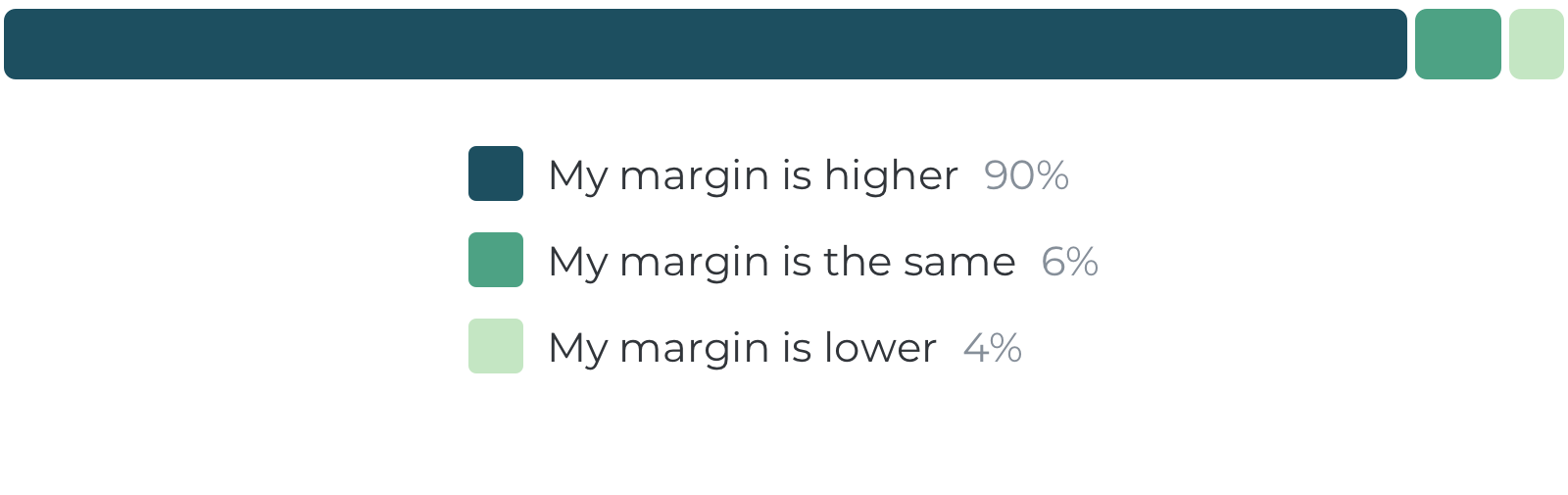
90% of the farmers claim that their margins are better thanks to direct sales. In addition, some farmers have commented on the price security it provides them compared to the traditional sales channel.
“Direct selling gives you a lot of peace of mind by allowing you to know the price for the next year, as opposed to being uncertain from year to year“.
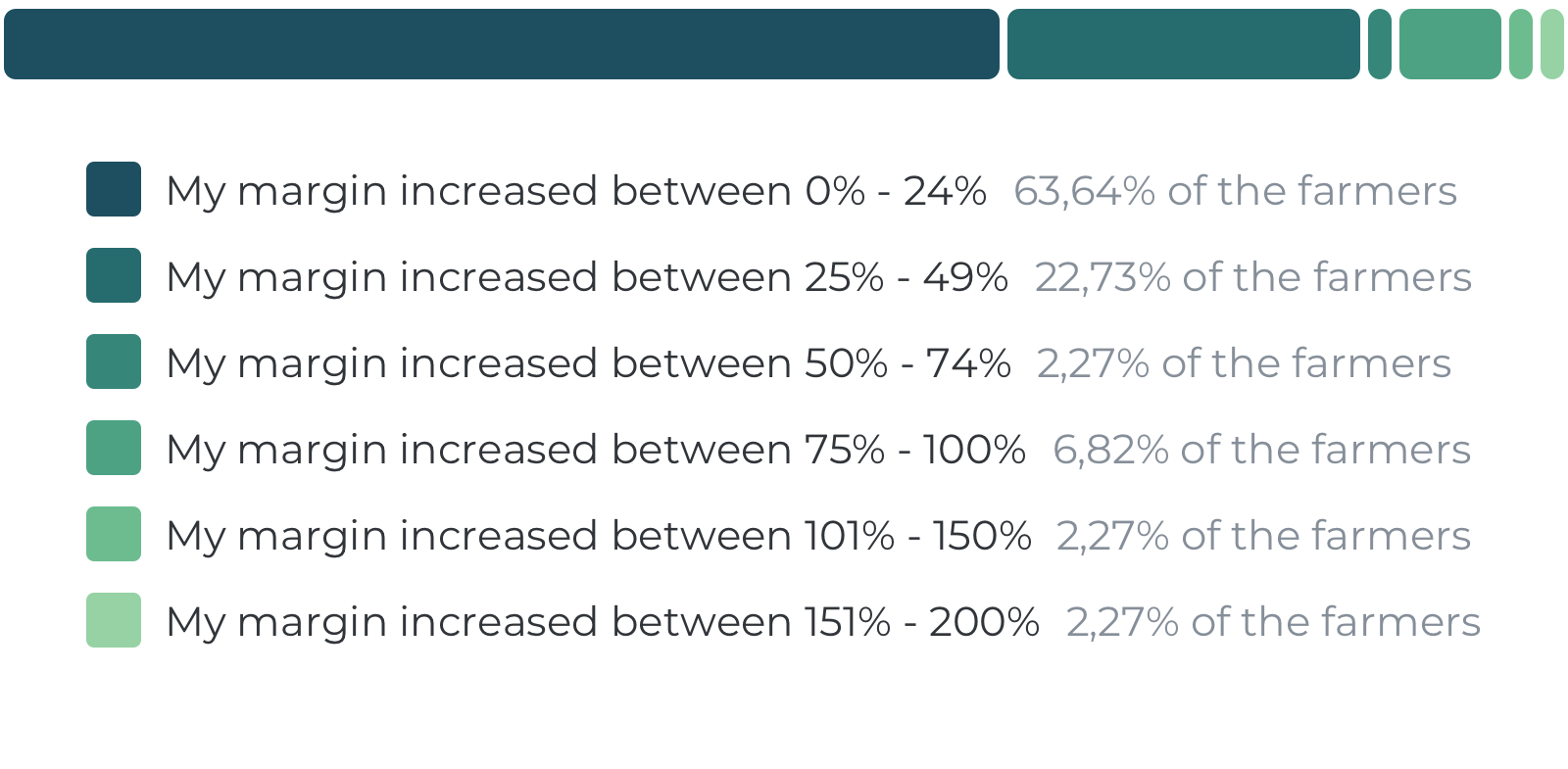
64% of the farmers who claim to have a higher margin reported an improvement in income of up to 25%. The remaining 36% reported an improvement in income of 25% or more.
“The best thing is knowing that your product goes directly to consumers who know and value it. There’s a lot of work behind it, but the selling price makes up for it.”
Social impact
The benefits of direct sales are not limited to the economic aspect. The results of the survey show that direct sales help revitalize rural areas and generate quality employment.
Would you say that direct selling helps you pay better wages to your workers?

Would you say that direct selling has allowed you to hire more people or generate new types of employment on your farm or estate?

Nearly 79% of the farmers surveyed said they can pay their workers better wages through direct sales. 71% stated that direct sales have allowed them to hire more people or have generated new jobs on their farm. In this regard, one farmer tells us what led him to get involved in direct sales.
“To promote rural development and ensure a fair price at the source for the farmers. If the project succeeds, we can give work to people in the surrounding area.”
Being able to hear what consumers have to say about the products is a new experience for the farmers.
I feel that, thanks to direct sales…
…consumers value my work more

…consumers know the product better

…I better understand consumers’ needs

…consumers are more interested in the quality than the price

For some, this new experience has allowed them to increase their motivation in the performance of their work.
“Although at first the main motivation was economic, now it is becoming more important to be able to farm for people and not so much for businesses. To have the opportunity to be able to explain the unexpected things that happen, and for the Crowdfarmers to understand and even encourage you.”
Environmental impact
To correctly measure the environmental impact, we must take into account the entire supply chain: production, harvest, packaging and shipping.
86% of those surveyed stated that they had a “zero-waste” policy on their farm.
Do you have a zero-waste policy on your farm?

In terms of waste, more than 81% agree that direct sales help reduce food or raw material waste.
Would you say that direct sales help reduce the waste of food or raw material?
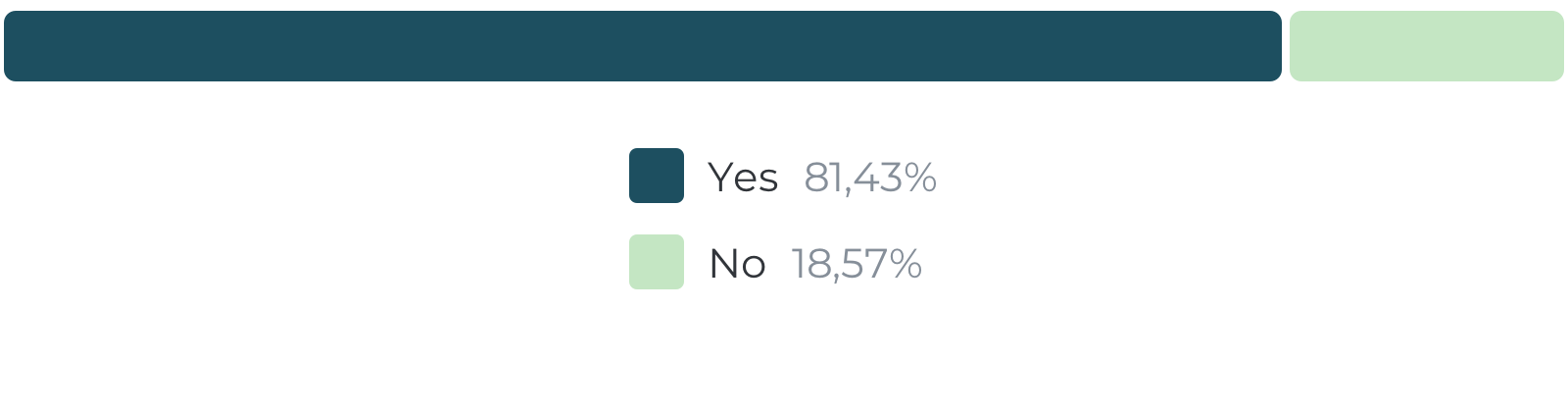
A recurring observation is that the adoption model allows for production on demand and eliminates unnecessary links in the supply chain, as these farmers point out.
“To produce on demand. Avoid warehousing and order only the material you need (containers, boxes…)”
“Due to the anticipation in the deliveries, it is not necessary to accumulate produce in refrigerated chambers since the period between harvest and shipment is minimal. On the other hand – in our case, as avocado producers – unlike large supermarkets and wholesalers, we do not use ripening chambers but our fruit is left to ripen on the tree and therefore no energy or chemical products are used, which is a totally natural process. Furthermore, our avocados have a very low carbon footprint due to being a European product, unlike most of the avocados that are sourced from distant origins and that travel for up to three weeks. Unlike in large supermarkets, our fruit does not contain chemical products to extend its shelf life due to the direct sale through CrowdFarming.”
“Lower GHG emissions due to less transport of the products: they only travel once, from the farm to the consumer.”
Direct sales immediately influence the production and packaging methods used by the farmers.
I feel that, thanks to direct sales…
…I put more emphasis on environmental issues thanks to consumers

…I apply more environmentally friendly production techniques

…I use more environmentally friendly packaging

By getting a better price, the farmer can commit to producing in a more environmentally friendly way, like these two farmers.
“Access to a better price helps improve environmental practices on farms.“
“We have eliminated all plastic packaging for our products.“
We will update the data from this survey on an annual basis. If you have any questions that you would like us to include in future surveys you can share them with us.
At CrowdFarming we are convinced that direct selling is the future of agriculture in Europe. The results of this survey reinforce our vision and motivate us to continue helping more farmers to join this agri-social revolution.
Learn more about new farmers who have started selling their products directly
Written by Martínez de Aragón

Keep digging ...