





Published March 2026
To compensate or to change, that is the question
Seemingly every day a new company announces plans to become more “eco-friendly”, plans for a CO2 compensation scheme, a “conscious” product line or some type of sustainability-related certificate. The classics are carbon offset programs, a way for individuals or organizations to reduce their carbon footprint (or at least that’s the idea), for example by “neutralizing” the emissions of a flight by paying for having a tree planted or investing in another type of environmental project.
While the idea itself seems perfectly legitimate and rather reasonable, it also elicits a major question: Are companies using these compensation schemes to keep on doing business as usual without the public backlash?
If we keep on polluting this planet, be it through transport, dirty energy, industrial chemicals, or plastic, the ongoing negative impact is bound to weigh more than any attempt at compensation. And what’s more, compensation schemes might be better than nothing, but they also serve as a shield against our bad conscience and our need to change. This goes for individuals as much as for companies, although a company’s impact is considerably higher. If a company chooses the compensation route instead of shifting its values and bringing about actual change, it is ultimately choosing to not actively confront the part it plays in the climate crisis.
No doubt carbon offset programs are needed, not only because change is slow, but also because they offer our planet some immediate relief. However, they cannot be the only road taken, rather they should be complementary. Ideally, a company aims to operate in such a manner that there is no need to compensate for anything.
(Net) zero promises
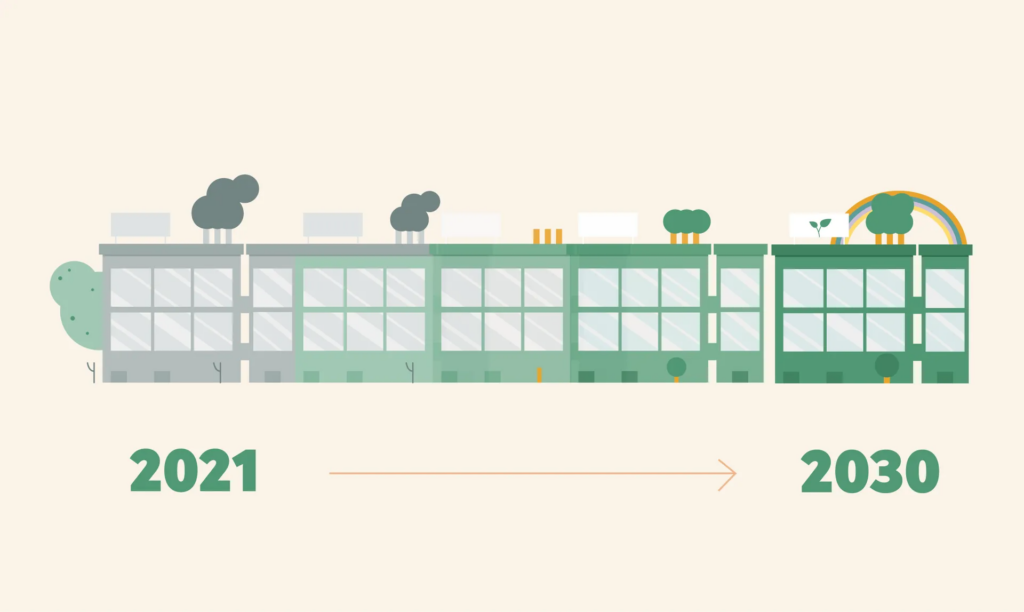
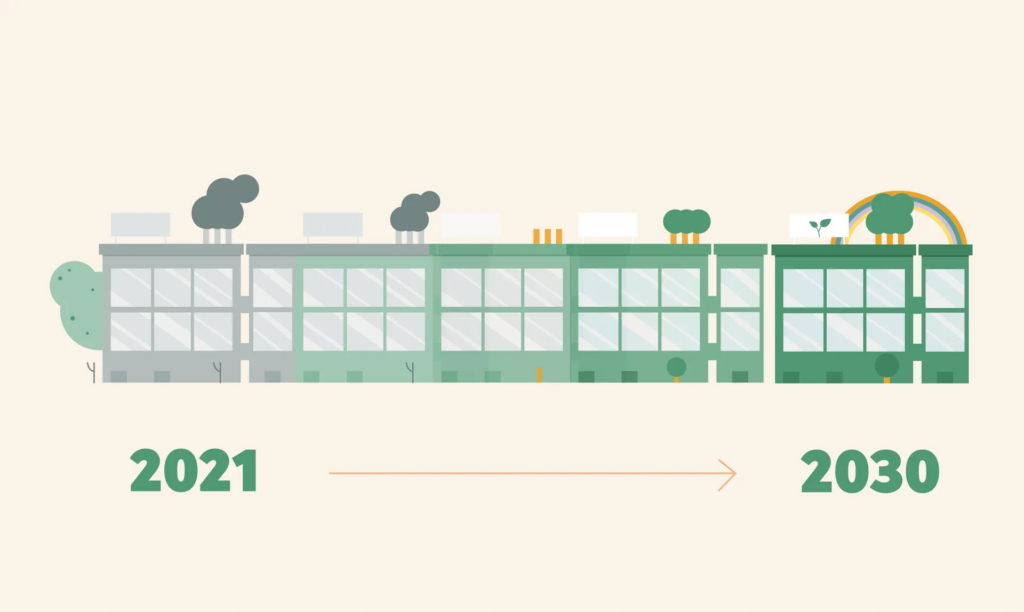
Another way operations are tackling the PR side of climate change is by announcing (somewhat) ambitious plans to reduce their emissions sometime in the future. Promises like “net zero”, indicating that they intend to stop emitting greenhouse gases altogether, serve as the ultimate crowd pleaser. An admirable goal, but here’s the catch: it’s one thing to set targets and announce them to the world, but quite another to actually come through and achieve them. Any company may say they are planning on achieving “net zero” or “cutting emissions in half” by 2030 (insert another distant year) but how many of them actually follow up on these promises? Who’s to say they will not simply use the “we tried” excuse come said date? Will the public even remember the promise and call the company out on it so many years later? Demand proof of concrete actions taken? The climate crisis is here already and as Greta Thunberg keeps reminding us – the time to act is now. Instead of setting targets accompanied by vague and distant action plans, companies should take a sharp look at what they can do today to make a palpable difference. A good motivator for accountability would be to measure a company’s success through metrics such as environmental impact (measuring electricity usage, gallons of water saved, waste diversion etc.) and not just “growth” and profit.
The thing with “natural”, “eco” and “recyclable”
While there are voices denouncing emission targets, compensation programs, or even new supposedly “sustainable” product lines as greenwashing, others are quick to point out that “climate pledge friendly” (as Amazon calls it) initiatives are better than doing nothing. Why the greenwashing reproach when companies are trying to get on board with the demand for sustainability? The crux of the matter is that by giving their products a “green” appearance, some operations are simply trying to win back or keep consumers that have started to reflect on the impact of their own actions and behaviours, or on the impact of companies on the climate crisis in general. Both consumers and companies need to ask themselves: Do we want to change the system or keep going by trying to compensate for recurring damages?
On the consumer side it would be helpful to be more honest with ourselves. Everything we consume has an impact, be it on the climate, our resources, or our waste. If I buy a new piece of clothing, it can be labelled an “eco” garment because it’s made of organic cotton and it might even be made in Europe instead of at a mass factory in China or Bangladesh. But producing it will still require energy and water, the supply chain will still require a lot of CO2 emissions and most likely it will arrive either at the store or at my home sealed in a plastic bag. Is it better than buying from a brand that doesn’t even try to do better? Sure, but not as much as getting a “pre-owned” dress or “upcycling” one you already own.
A shampoo that is “97% made of natural ingredients” doesn’t tell you how these ingredients were sourced, if the previous formula was any different, or if the remaining 3% are potentially harmful substances that are just what should be avoided when producing shampoo. The distinction “natural” (or “eco”) in itself is problematic for lack of a concrete legal definition. Where do producers draw the line between “natural” and “unnatural”? Would the second case be an ingredient that is the product of black magic? The fact of the matter is that there is no specific European regulatory reference for claims such as “natural”.
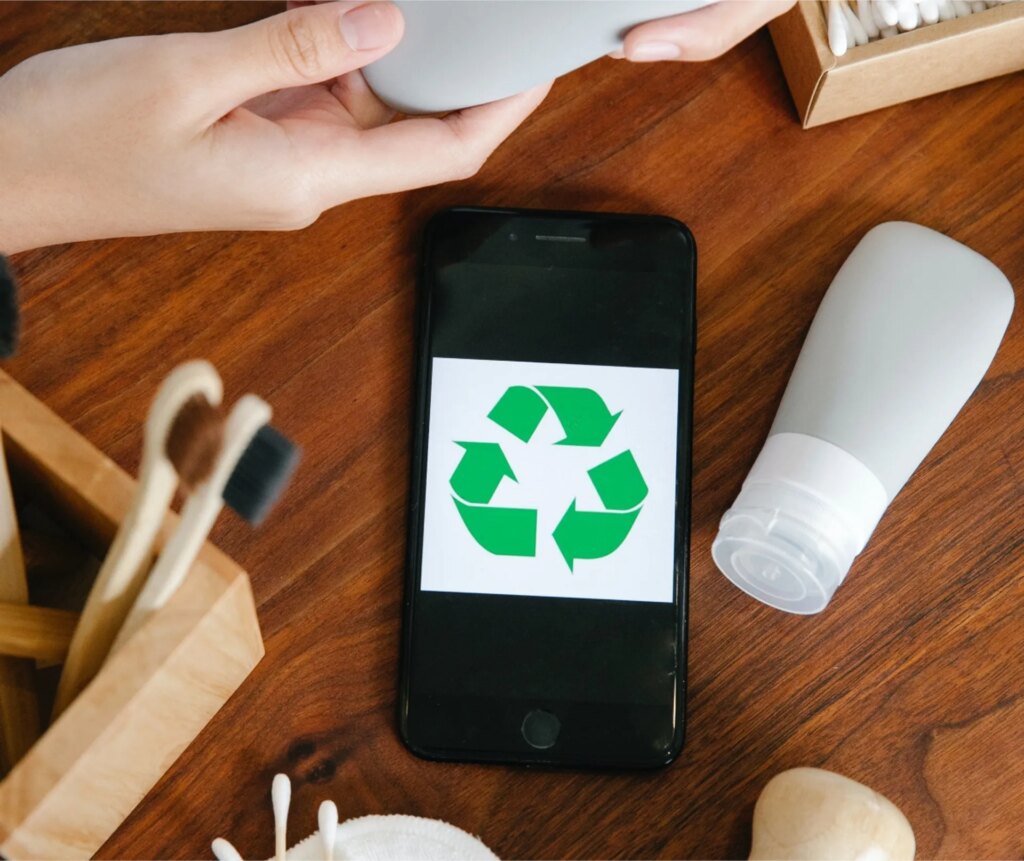
Another problematic claim is the term “recyclable”, usually used as a way of making people feel better about plastic. Just because something is theoretically recyclable does not mean that it will be recycled. In fact, it is a rather unlikely scenario, as only 9% of all plastic ever produced has been recycled. (Also, plastic production requires fossil fuels such as oil and gas, so simply making it automatically implies severe pollution.)
A hopeful reflection for the future is that people are realizing that, in addition to the price and quality of a product, there is one more variable to take into account: the environmental impact it has generated.
Making it happen
For people to have a real idea of the environmental impact of their purchases, the company needs to be transparent about its processes and production methods, and stick to claims that can be proven. Giving real insight about what goes into a final product, how it is made and its journey, is the information we need to be able to estimate what we contribute to when buying it. The only way to know if a company is serious about its carbon emission targets for example, is if they make the corresponding information available to the public, give regular and honest updates on their progress, and set milestones for the near future and not just an “end goal” for the distant one.
Although the main responsibility lies with our governments, the debate about what needs to be done to avert further escalation in terms of climate change has increasingly gained traction in our daily lives. The main thing to do is to clearly signal to our politicians that the environment needs to come first, and build pressure for them to do better (and do it faster), which includes forcing companies into action. As individuals, what we can do besides reflect on our own consumption patterns, is to try to avoid companies that make it hard to find out if they are just compensating or truly trying to change. Or, even worse: operations that are so far removed from their responsibility in the climate crisis that they do neither. Luckily, more and more companies are becoming “changemakers” and everybody can wield their will and purchasing power to contribute to that change.
Written by Emmeline Hess

Emmeline es experta en comunicación, vocación que ha estado ejerciendo durante más de 9 años en empresas con enfoque en la sostenibilidad.
Esta nueva podcaster es una gran aficionada a la comida, una preocupada por el cambio climático (aspirante a guerrera) y le gusta una buena discusión casi tanto como los perros.
Keep digging ...